

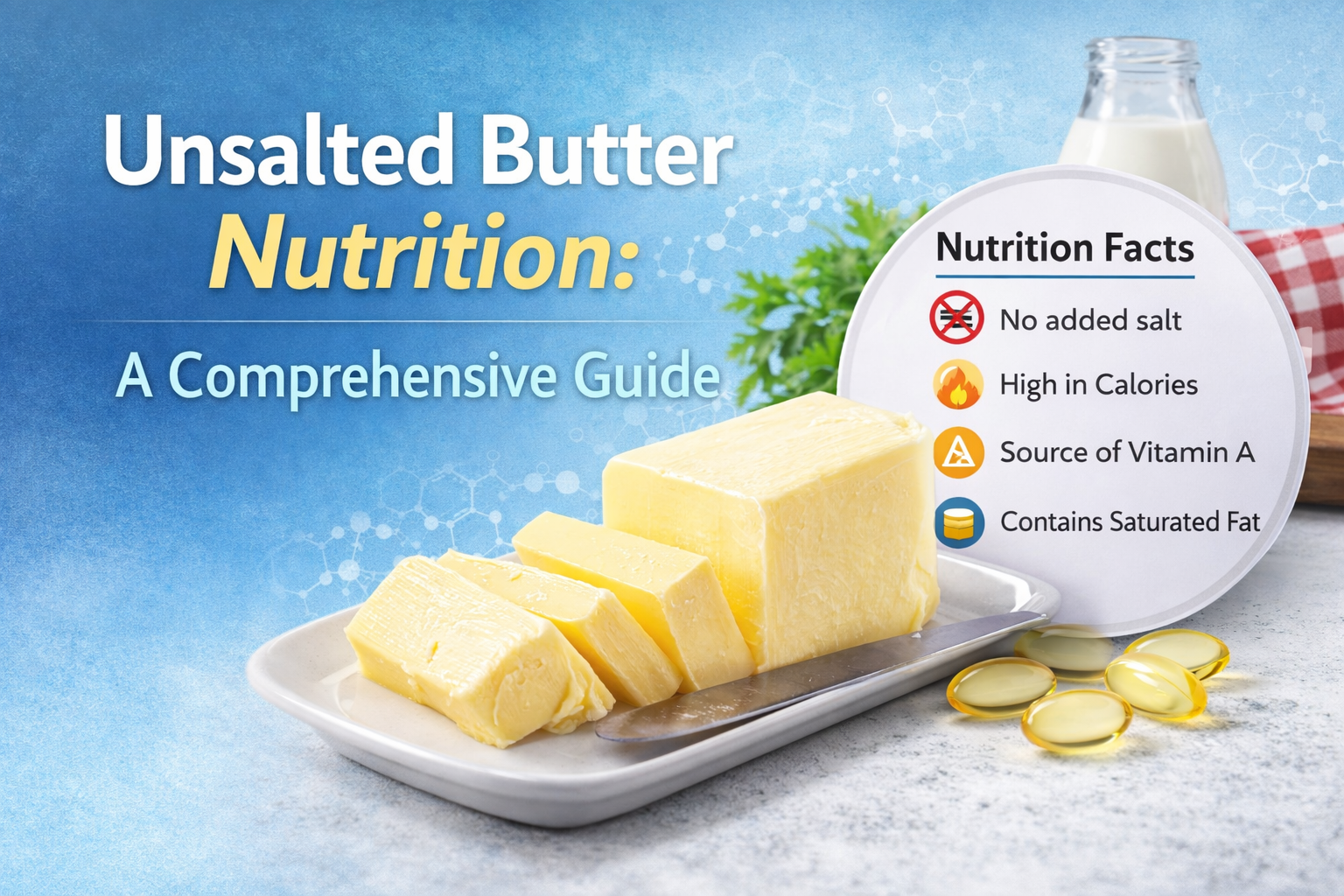
Unsalted butter is a popular kitchen staple used in cooking, baking, and spreading on bread. Known for its rich flavor and creamy texture, it is made by churning fresh cream until the butterfat separates from the liquid. Unlike salted butter, unsalted butter contains little to no added sodium, making it a preferred option for many recipes and health-conscious individuals.
Understanding unsalted butter nutrition can help you decide how it fits into a balanced diet. This guide explores its nutritional profile, health benefits, potential drawbacks, and how to use it wisely in your daily meals.
1.What Is Unsalted Butter?
Unsalted butter, often called sweet cream butter, is made from pasteurized cream without added salt. Because it lacks sodium, it allows cooks and bakers to control the exact amount of salt in recipes.
It is widely used in baking because salt levels in salted butter can vary between brands. Using unsalted butter ensures consistent taste and better control of seasoning.
2. Unsalted Butter Nutrition Facts
A standard serving of unsalted butter is 1 tablespoon (about 14 grams). Despite its small serving size, it is energy-dense because it is primarily made of fat.
Nutrition per tablespoon:
-
Calories: 102
-
Total fat: about 11.5–12 grams
-
Saturated fat: about 7 grams
-
Carbohydrates: 0 grams
-
Protein: about 0.1 grams
-
Sodium: about 2 milligrams
-
Cholesterol: around 30 milligrams
Because it contains almost no carbohydrates or protein, most of the calories in butter come from fat.
3. Vitamins and Minerals in Unsalted Butter
Although butter is mostly fat, it does provide small amounts of essential nutrients. These include:
1. Vitamin A
Unsalted butter is a good source of vitamin A, which supports vision, immune health, and skin function. A tablespoon can provide around 11–14% of the recommended daily intake.
2. Vitamin D
Butter contains small amounts of vitamin D, which helps the body absorb calcium and maintain healthy bones.
3. Vitamin E
Vitamin E acts as an antioxidant that protects cells from damage.
4. Vitamin K
This vitamin supports blood clotting and bone health.
Although these nutrients are present, butter should not be relied upon as a major source of vitamins because the amounts are relatively small.
4. Fat Content in Unsalted Butter
Butter is composed of roughly 80% fat, which explains its high calorie content.
The fats in butter include:
-
Saturated fat – the largest portion
-
Monounsaturated fat – beneficial fats that may support heart health
-
Polyunsaturated fat – smaller amounts of essential fatty acids
While saturated fat is often associated with increased cholesterol levels when consumed excessively, moderate intake may be part of a balanced diet.
5. Health Benefits of Unsalted Butter
When consumed in moderation, unsalted butter can provide several potential benefits.
1. Supports Energy Production
Because it is rich in fat, butter provides a concentrated source of energy. This can be useful for people who need higher calorie intake, such as athletes or individuals with demanding physical activities.
2. Provides Fat-Soluble Vitamins
Butter contains fat-soluble vitamins such as A, D, E, and K that are important for immune function, bone health, and skin health.
3. Contains Butyrate
Butter naturally contains butyrate, a short-chain fatty acid linked to improved gut health and reduced inflammation in some studies.
4. Enhances Flavor and Satiety
Adding a small amount of butter to meals can improve taste and help increase satiety, making meals more satisfying and enjoyable.
6. Unsalted Butter vs Salted Butter
The main difference between these two types of butter is sodium content.
| Feature | Unsalted Butter | Salted Butter |
|---|---|---|
| Sodium | Very low | Higher |
| Taste | Mild, creamy | Slightly salty |
| Best use | Baking and controlled seasoning | Spreading and cooking |
Because unsalted butter has minimal sodium, it allows cooks to add salt separately according to taste.
7. Potential Health Concerns
Although unsalted butter offers some benefits, it also has drawbacks if consumed excessively.
High in Saturated Fat
A single tablespoon contains about 7 grams of saturated fat, which can contribute significantly to daily limits.
High saturated fat intake has been linked to increased risk of heart disease when consumed in large amounts.
High Calorie Density
Butter is calorie-dense, meaning small portions contain many calories. Overconsumption can contribute to weight gain if not balanced with overall calorie intake.
Limited Nutritional Variety
Compared with whole foods such as vegetables, nuts, and grains, butter provides fewer vitamins and minerals.
8. Tips for Using Unsalted Butter in a Healthy Diet
If you enjoy butter, moderation is key. Here are some ways to include it responsibly:
1. Control portion sizes
Use small amounts rather than large servings.
2. Combine with healthy foods
Pair butter with vegetables, whole grains, or lean proteins.
3. Use it for flavor enhancement
A small amount can improve the taste of dishes without excessive calories.
4. Balance with healthier fats
Include other healthy fats such as olive oil, nuts, and avocados in your diet.
9. How to Store Unsalted Butter
Proper storage helps maintain freshness and quality.
-
Refrigeration: Store butter in the refrigerator to prevent spoilage.
-
Freezing: Butter can be frozen for several months if wrapped properly.
-
Airtight container: Prevents it from absorbing odors from other foods.
10. Is Unsalted Butter Healthy?
Unsalted butter can be part of a healthy diet when consumed in moderation. It provides energy, fat-soluble vitamins, and a rich flavor that enhances many dishes.
However, because it is high in calories and saturated fat, it should not be consumed excessively. A balanced diet that includes a variety of healthy foods remains the best approach to overall nutrition.
Final Thoughts
Unsalted butter is a versatile ingredient widely used in cooking and baking. While it is rich in flavor and provides certain vitamins and healthy fats, it should be consumed in moderation due to its high calorie and saturated fat content.
By understanding unsalted butter nutrition, you can enjoy this classic ingredient while maintaining a balanced and healthy lifestyle.


