

Introduction
Ovarian cysts are a common health condition affecting many women, especially during their reproductive years. A cyst is a fluid-filled sac that develops in or on the ovary. Most ovarian cysts are harmless and disappear on their own, but understanding how they form is essential for early awareness and proper care.
In this article, we will explain in simple terms how ovarian cysts develop, their causes, types, and risk factors.
What Is an Ovarian Cyst?
An ovarian cyst is a sac filled with fluid or semi-solid material that forms inside or on the surface of an ovary. Women have two ovaries, one on each side of the uterus, and these organs play a key role in releasing eggs and producing hormones.
Most cysts are benign (non-cancerous) and often do not cause noticeable symptoms.
How Does an Ovarian Cyst Form?
The formation of an ovarian cyst is closely related to the menstrual cycle. Let’s understand the process step by step:
1. Normal Ovulation Process
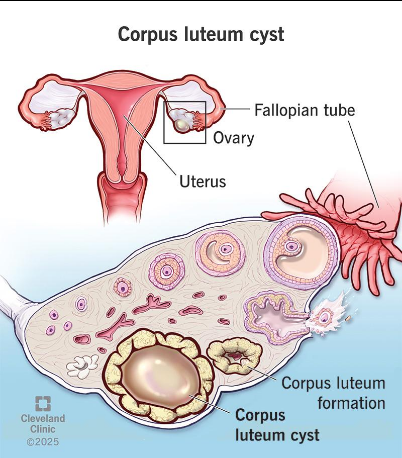
Each month, the ovaries produce small sacs called follicles. These follicles contain immature eggs. During ovulation, one follicle grows larger and eventually releases an egg.
2. When Something Goes Wrong
A cyst forms when this normal process is disrupted. Instead of releasing the egg or shrinking after ovulation, the follicle may continue to grow or fill with fluid.
3. Fluid Accumulation
As fluid builds up inside the follicle or surrounding tissue, it enlarges and becomes a cyst.
According to medical research, most ovarian cysts form due to natural hormonal changes during the menstrual cycle.
Types of Ovarian Cysts and How They Form
1. Functional Cysts (Most Common)

Functional cysts are directly linked to ovulation and are the most common type.
a) Follicular Cyst
- Forms when the follicle fails to rupture and release the egg
- Continues to grow and fill with fluid
b) Corpus Luteum Cyst
- After releasing the egg, the follicle becomes the corpus luteum
- If the opening seals off, fluid accumulates inside, forming a cyst
These cysts are usually harmless and disappear within a few menstrual cycles.
2. Pathological Cysts (Less Common)
These cysts are not related to the menstrual cycle and may require medical attention.
a) Dermoid Cysts
- Form from reproductive cells
- May contain hair, skin, or even teeth
b) Cystadenomas
- Develop from the outer surface of the ovary
- Filled with watery or mucus-like fluid
c) Endometriomas
- Caused by endometriosis, where uterine tissue grows outside the uterus
- Tissue attaches to the ovary and forms a cyst
Main Causes of Ovarian Cyst Formation
Several factors can lead to cyst development:
1. Hormonal Imbalance
Changes in hormone levels can disrupt ovulation and lead to cyst formation.
2. Pregnancy
Sometimes the follicle remains on the ovary during early pregnancy and forms a cyst.
3. Endometriosis
Tissue growth outside the uterus can attach to the ovary and create cysts.
4. Pelvic Infections
Severe infections that spread to the ovaries can cause cysts.
5. Polycystic Ovary Syndrome (PCOS)
PCOS leads to multiple small cysts due to irregular ovulation.
These causes are commonly linked to both functional and pathological cysts.
Risk Factors
Certain conditions increase the chances of developing ovarian cysts:
- Irregular menstrual cycles
- Hormonal medications (fertility drugs)
- Previous history of ovarian cysts
- Severe pelvic infections
- Endometriosis
Symptoms of Ovarian Cysts
Many cysts do not cause symptoms, but larger ones may lead to:
- Pelvic pain (sharp or dull)
- Bloating or abdominal fullness
- Irregular periods
- Pain during intercourse
In rare cases, complications like rupture or twisting of the ovary may occur, which require immediate medical attention.
Are Ovarian Cysts Dangerous?
Most ovarian cysts are not dangerous and resolve naturally within a few months. However, some cysts can grow large, rupture, or cause complications like ovarian torsion (twisting of the ovary).
Regular medical checkups help detect any serious conditions early.
Prevention and Care
While ovarian cysts cannot always be prevented, you can reduce risks by:
- Maintaining hormonal balance
- Regular gynecological checkups
- Monitoring menstrual cycle changes
- Seeking medical advice for unusual symptoms
Conclusion
Ovarian cysts form mainly due to changes in the normal ovulation process. When a follicle does not release an egg or fails to shrink properly, fluid accumulates and forms a cyst. Most cysts are harmless and temporary, but understanding their formation helps in early detection and better management.
If you experience persistent pain or irregular symptoms, it is important to consult a healthcare professional.


