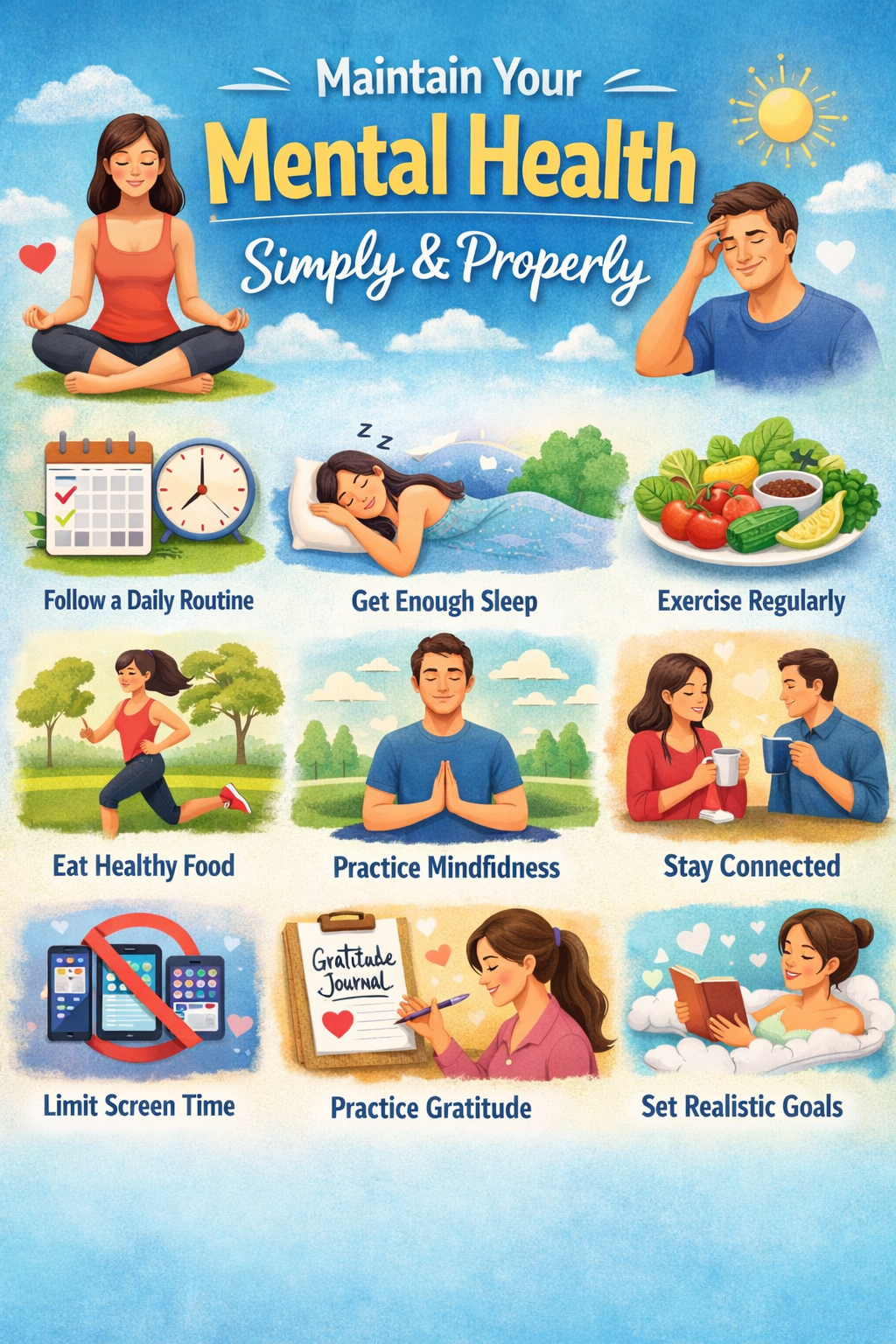
Mental health is just as important as physical health, yet many people ignore it until problems become serious. In today’s fast-paced world, stress, anxiety, and emotional pressure have become common. Work pressure, social media, financial worries, and daily responsibilities can make life overwhelming. The good news is that maintaining good mental health does not require complicated treatments or expensive programs. Small and simple daily habits can help keep your mind balanced, calm, and strong.
Maintaining mental health simply and properly means developing a healthy routine, taking care of your body, building positive relationships, and learning how to manage stress effectively. With consistent effort, anyone can improve their emotional well-being and lead a happier life.
Understanding Mental Health
Mental health refers to a person’s emotional, psychological, and social well-being. It affects how people think, feel, and behave in everyday life. It also influences how individuals handle stress, make decisions, and interact with others.
When mental health is good, a person feels motivated, confident, and able to manage daily challenges. However, poor mental health can lead to problems such as anxiety, depression, lack of focus, and emotional instability.
Fortunately, mental health can be improved through simple lifestyle habits and self-care practices.
1. Maintain a Healthy Daily Routine
One of the easiest ways to maintain mental health is by creating a daily routine. Having a structured day gives your mind stability and reduces stress. Wake up at a consistent time, eat meals regularly, and create time for work, relaxation, and sleep.
A predictable routine helps the brain feel safe and organized. It also prevents chaos and reduces feelings of overwhelm.
2. Get Enough Sleep
Sleep plays a major role in mental health. Poor sleep can increase stress, irritability, and emotional instability. Experts recommend sleeping around 7–9 hours per night to support emotional balance and brain function.
To improve sleep quality:
-
Go to bed and wake up at the same time every day
-
Avoid using phones before bedtime
-
Keep your bedroom quiet and comfortable
-
Practice relaxing activities like reading or meditation
Good sleep allows the brain to rest, repair itself, and regulate emotions.
3. Exercise Regularly
Physical activity is one of the most effective ways to maintain mental health. Exercise releases natural chemicals called endorphins that improve mood and reduce stress. Even simple activities like walking, yoga, cycling, or dancing can boost mental well-being.
You do not need intense workouts. Just 20–30 minutes of movement daily can reduce anxiety and improve emotional stability.
Exercise also helps improve sleep, increase energy, and build self-confidence.
4. Eat a Balanced Diet
What you eat directly affects how you feel. A balanced diet supports brain health and emotional stability. Foods rich in nutrients help the brain function properly and maintain good mood levels.
Healthy foods for mental health include:
-
Fruits and vegetables
-
Whole grains
-
Lean proteins
-
Nuts and seeds
-
Omega-3 fatty acids from fish or flaxseeds
Avoid excessive sugar, caffeine, and processed foods because they can negatively affect mood and energy levels.
Staying hydrated is also important, as dehydration can cause fatigue and irritability.
5. Practice Mindfulness and Meditation
Mindfulness means focusing on the present moment without judgment. It is a powerful tool for reducing stress and improving emotional awareness.
Meditation, deep breathing, or simple relaxation exercises can calm the nervous system and clear the mind. Even 10 minutes of mindfulness daily can reduce anxiety and improve mental clarity.
Some simple mindfulness practices include:
-
Deep breathing exercises
-
Meditation
-
Yoga
-
Journaling thoughts and feelings
These techniques help control negative thoughts and increase emotional balance.
6. Stay Connected with Others
Humans are social beings. Healthy relationships and social support are essential for good mental health. Talking to friends, family members, or supportive communities can reduce stress and provide emotional comfort.
Spending time with loved ones helps create a sense of belonging and reduces feelings of loneliness. Strong social connections are known to improve emotional resilience and overall well-being.
You can strengthen relationships by:
-
Calling or meeting friends regularly
-
Sharing your feelings openly
-
Participating in social activities
-
Joining clubs or community groups
Positive relationships act as emotional support during difficult times.
7. Limit Screen Time and Social Media
While technology helps people stay connected, excessive screen time can negatively affect mental health. Constant exposure to social media, negative news, and unrealistic comparisons may increase stress and anxiety.
Setting boundaries for digital use can protect your mental well-being. Try to reduce unnecessary scrolling and spend more time doing meaningful activities like reading, exercising, or spending time outdoors.
Creating digital-free periods during the day can help your mind relax and recharge.
8. Practice Gratitude
Gratitude is a simple yet powerful habit that can improve mental health. Writing down things you are thankful for each day helps shift focus from negative thoughts to positive experiences.
Practicing gratitude increases happiness, improves mood, and reduces stress. Even small things like appreciating nature, family support, or personal achievements can create a positive mindset.
Over time, gratitude trains the brain to focus on positive aspects of life rather than problems.
9. Set Realistic Goals
Setting achievable goals helps build motivation and confidence. Break large tasks into smaller steps and celebrate progress along the way.
Accomplishing small goals creates a sense of achievement and improves self-esteem. It also reduces the feeling of being overwhelmed by large responsibilities.
Remember that personal growth takes time, so patience and consistency are important.
10. Take Time for Yourself
Self-care is essential for maintaining mental health. Taking time for yourself allows the mind to relax and recharge.
Simple self-care activities include:
-
Reading a book
-
Listening to music
-
Walking in nature
-
Practicing hobbies
-
Spending quiet time alone
These activities help reduce stress and improve emotional balance.
When to Seek Professional Help
While simple habits can greatly improve mental health, sometimes professional support is necessary. If someone experiences persistent sadness, anxiety, or emotional distress that affects daily life, it may be helpful to talk to a therapist or counselor.
Seeking help is a sign of strength, not weakness. Mental health professionals can provide guidance, coping strategies, and treatment when needed.
Conclusion
Maintaining mental health simply and properly does not require complicated methods. Small daily habits such as getting enough sleep, exercising, eating healthy foods, practicing mindfulness, and maintaining strong relationships can significantly improve emotional well-being.
Mental health is a lifelong journey that requires care and attention. By making simple changes in daily routines and prioritizing self-care, anyone can build a healthier mind and a more fulfilling life.
Taking care of your mental health today will help create a happier, more balanced future.