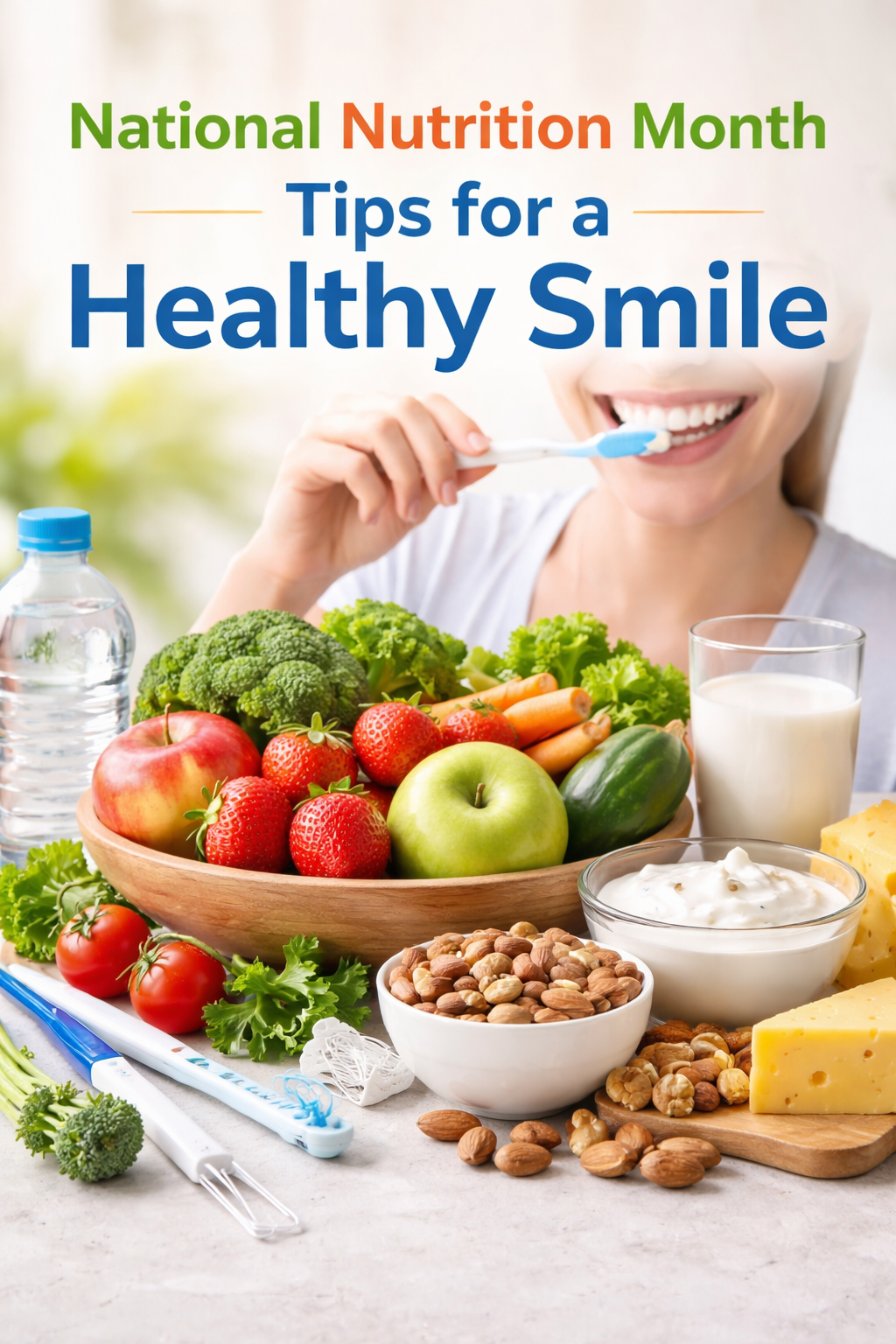
March is celebrated as National Nutrition Month, a time dedicated to raising awareness about the importance of healthy eating and lifestyle choices. While most people associate nutrition with weight management and overall health, one crucial aspect often overlooked is oral health.
Your smile is directly connected to what you eat. A balanced diet not only strengthens your body but also plays a key role in maintaining strong teeth, healthy gums, and fresh breath. This guide will help you understand how nutrition impacts your oral health and how you can build habits for a brighter, healthier smile.
The Link Between Nutrition and Oral Health
Your mouth is the entry point to your digestive system, and it reflects your overall health. Poor nutrition can lead to tooth decay, gum disease, and other dental problems.
According to oral health experts, sugar and acidic foods are the biggest threats to your teeth, as they weaken enamel and lead to cavities.
On the other hand, a nutrient-rich diet helps:
- Strengthen tooth enamel
- Protect gums from infection
- Maintain proper saliva production
- Prevent bad breath
A healthy diet is not just about avoiding harmful foods—it’s also about including the right nutrients.
Best Foods for a Healthy Smile

1. Dairy Products
Milk, cheese, and yogurt are rich in calcium and phosphorus, which help strengthen tooth enamel and bones.
2. Crunchy Fruits and Vegetables
Foods like apples, carrots, and celery act as natural toothbrushes. They stimulate saliva production, which helps wash away bacteria.
3. Leafy Greens
Spinach, kale, and other greens are packed with vitamins and minerals that support gum health.
4. Nuts and Seeds
These provide essential nutrients and help neutralize acids in the mouth.
5. Water
Staying hydrated helps rinse away food particles and maintain saliva flow, which is essential for oral health.
Foods to Avoid for Better Oral Health
1. Sugary Foods and Drinks
Sugar feeds harmful bacteria in the mouth, leading to plaque buildup and tooth decay.
2. Acidic Foods
Citrus fruits, sodas, and vinegar-based foods can erode enamel over time.
3. Sticky Snacks
Candies and dried fruits stick to teeth, increasing the risk of cavities.
4. Soft Drinks and Energy Drinks
These beverages contain both sugar and acid, making them especially harmful to teeth.
Healthy Habits for a Brighter Smile
Good nutrition works best when combined with proper oral hygiene. Here are essential habits to follow:
1. Brush and Floss Regularly
Brush at least twice a day and floss daily to remove food particles and plaque.
2. Wait Before Brushing After Meals
Avoid brushing immediately after acidic foods; wait at least 30 minutes to protect enamel.
3. Choose Sugar-Free Gum
Chewing gum with xylitol increases saliva flow and helps protect teeth.
4. Stay Hydrated
Drinking water helps maintain a healthy pH level in the mouth and reduces bacteria.
5. Maintain a Balanced Diet
A diet rich in fruits, vegetables, and essential nutrients supports both oral and overall health.
The Role of Saliva in Oral Health
Saliva is often overlooked but plays a crucial role in maintaining a healthy mouth. It helps:
- Neutralize acids
- Wash away food particles
- Repair early tooth damage
Eating crunchy foods and staying hydrated can boost saliva production naturally, improving your oral health.
Why National Nutrition Month Matters
National Nutrition Month is not just about dieting—it’s about building lifelong habits that improve your quality of life.
By focusing on nutrition, you can:
- Prevent dental diseases
- Improve your confidence with a bright smile
- Support your immune system
- Enhance overall well-being
Oral health is closely linked to overall health, and neglecting it can lead to serious conditions beyond the mouth.
Simple Daily Diet Plan for Healthy Teeth
Here’s a quick example of a smile-friendly daily diet:
- Breakfast: Milk, whole-grain toast, and fruit
- Snack: Nuts or yogurt
- Lunch: Leafy greens, vegetables, and protein
- Snack: Apple or carrot sticks
- Dinner: Balanced meal with vegetables and calcium-rich foods
Avoid frequent snacking, as it increases acid attacks on your teeth.
Conclusion
A healthy smile starts with what you eat. This National Nutrition Month, take a step toward better oral health by choosing nutritious foods and maintaining good hygiene habits.
Remember, small daily changes—like drinking more water, reducing sugar, and eating more fresh foods—can make a big difference.
Your smile is one of your most valuable assets—nourish it with the right foods and care for a lifetime of confidence and health.