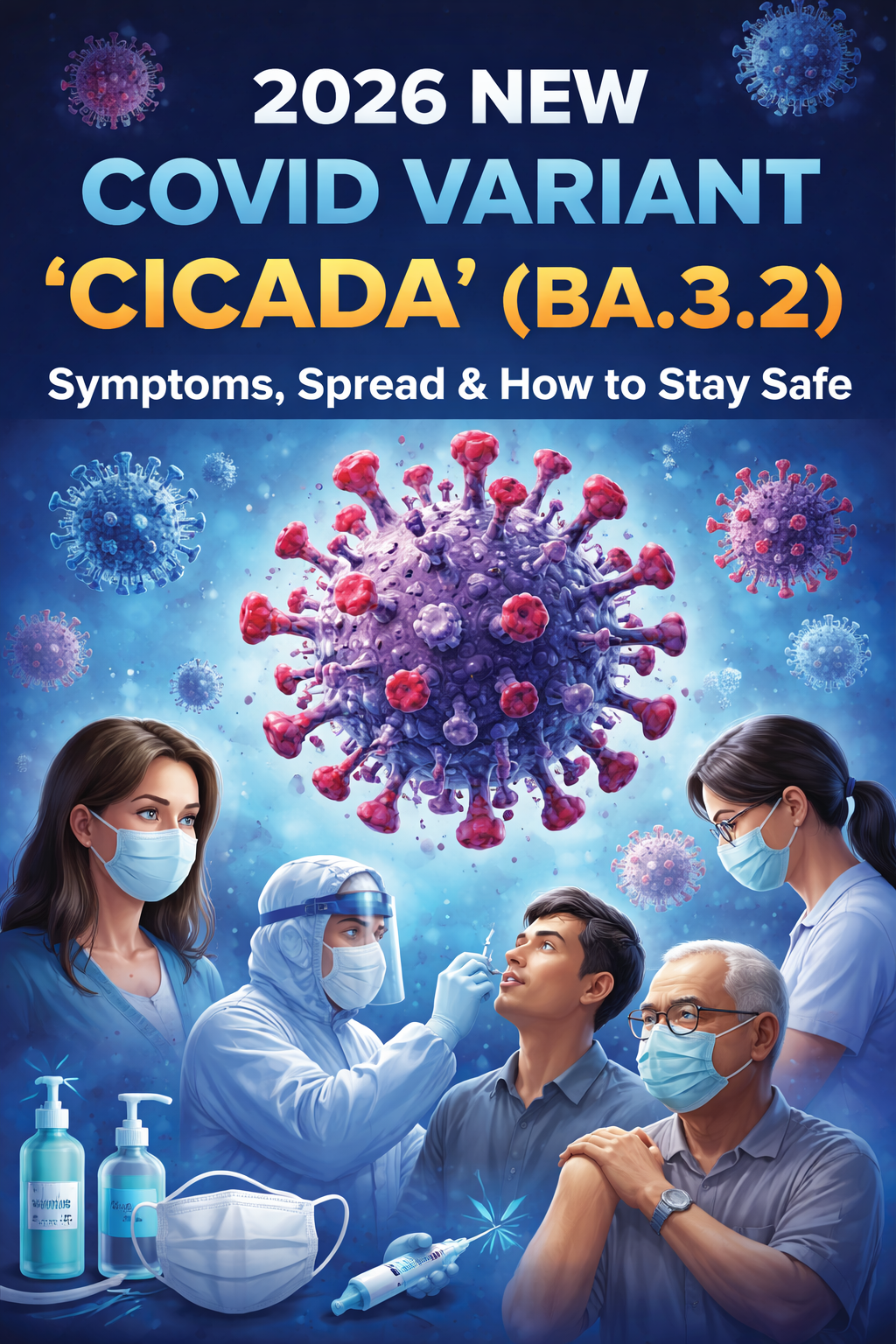
As the world continues to adapt to life after the COVID-19 pandemic, new variants of the virus still emerge and demand attention. In 2026, a new subvariant called BA.3.2, popularly known as the “Cicada” variant, has started spreading across multiple countries. While health experts emphasize that there is no need for panic, staying informed and cautious is essential.
This SEO-friendly article explains everything you need to know about the Cicada variant—its origin, symptoms, spread, and how to stay safe.
What is the Cicada Variant (BA.3.2)?
The Cicada variant is a subvariant of the Omicron strain of COVID-19. It was first detected in South Africa in late 2024 and began spreading more widely in 2025.
It earned the nickname “Cicada” because it appeared to remain dormant for a long time before re-emerging—similar to cicada insects.
Key Facts:
- Detected in 23+ countries worldwide
- Spread observed in the U.S., Europe, and other regions
- Classified as a “Variant Under Monitoring” by global health authorities
- Not currently considered a major global threat
Why is the Cicada Variant Important?
The Cicada variant has attracted attention mainly due to its high number of mutations.
- Around 70–75 mutations in the spike protein
- May partially evade immunity from vaccines or past infection
- Could spread more easily compared to some earlier strains
Despite these concerns, there is no strong evidence that BA.3.2 causes more severe illness than previous variants.
Symptoms of the Cicada Variant
The symptoms of BA.3.2 are very similar to earlier Omicron variants, making it difficult to identify without testing.
Common Symptoms:
- Severe sore throat
- Dry cough
- Fever and chills
- Fatigue and body aches
- Headache
- Runny or blocked nose
- Mild breathing difficulty (in some cases)
Most infections are reported to be mild to moderate, especially in vaccinated individuals.
How Fast is it Spreading?
The Cicada variant is spreading steadily but has not yet become dominant globally.
- Present in over 23 countries
- Detected in wastewater and clinical samples across multiple regions
- Cases increased globally since late 2025
In some regions of Europe, it has contributed to a noticeable rise in infections, although overall levels remain manageable.
Are Vaccines Still Effective?
Vaccines remain a critical tool in fighting COVID-19.
- May be less effective at preventing infection due to mutations
- Still highly effective in preventing severe illness and hospitalization
Experts strongly recommend staying up to date with booster doses.
Who is at Higher Risk?
While most people experience mild symptoms, some groups need extra caution:
- Elderly individuals
- People with weak immune systems
- Pregnant women
- Individuals with chronic diseases
These groups are more vulnerable to complications if infected.
Prevention: Stay Safe, Stay Smart
Even with new variants, basic precautions remain highly effective.
✔️ Daily Safety Tips
- Wear a mask in crowded or enclosed spaces
- Wash hands regularly with soap
- Avoid touching your face unnecessarily
- Maintain distance from sick individuals
✔️ Health Measures
- Get vaccinated and boosted
- Test yourself if symptoms appear
- Isolate if you feel unwell
- Consult a doctor for persistent symptoms
Should You Be Worried?
The current expert consensus is clear:
Stay alert, but don’t panic.
- The variant is not more deadly so far
- Most cases are mild
- Existing precautions still work
However, ignoring safety measures could lead to localized outbreaks or new waves, especially in areas with low immunity.
SEO Keywords (for optimization)
- Cicada COVID variant 2026
- BA.3.2 symptoms and prevention
- New COVID variant India risk
- Omicron subvariant Cicada details
- COVID safety tips 2026
Conclusion
The emergence of the Cicada (BA.3.2) variant is a reminder that COVID-19 is still evolving. While it is not currently a major threat, its high mutation rate and ability to spread mean we must remain cautious.
By staying informed, following safety guidelines, and protecting vulnerable groups, we can continue to manage the impact of new variants effectively.