

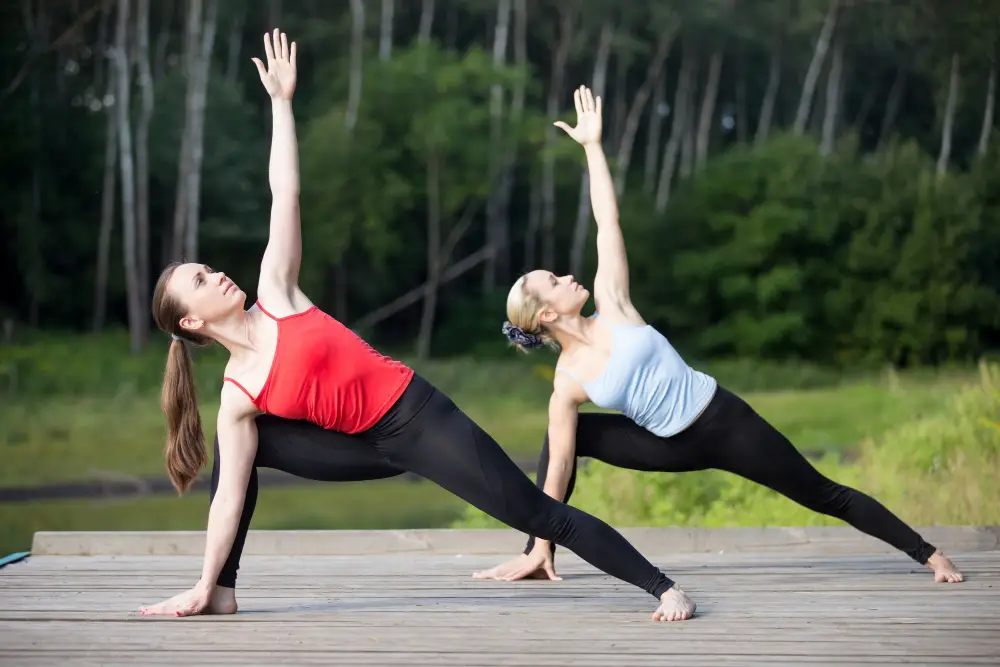
Every yoga practice is built from a handful of simple poses. Learn these 10 basic yoga poses and you will be ready to follow most beginner classes with confidence.
Hold each pose for 3 to 5 slow breaths. Move gently and never push into pain.
1. Mountain Pose (Tadasana)
Stand with feet together or hip-width apart, arms by your sides. Lengthen your spine, relax your shoulders, and spread your weight evenly through both feet.
Benefits: improves posture and body awareness.
2. Downward-Facing Dog (Adho Mukha Svanasana)
From hands and knees, lift your hips up and back to form an upside-down V. Press your hands into the mat and let your head hang. Bend your knees as much as you need.
Benefits: stretches the hamstrings, calves, and back; strengthens the arms.
3. Child’s Pose (Balasana)
Kneel, sit back on your heels, and fold forward with arms stretched ahead or resting by your sides. Rest your forehead on the mat or a cushion.
Benefits: relaxes the back and calms the mind. Use it to rest at any time.
4. Cat-Cow (Marjaryasana-Bitilasana)
On hands and knees, breathe in as you drop your belly and lift your chest (cow). Breathe out as you round your spine (cat). Repeat slowly.
Benefits: warms up and loosens the spine.
5. Warrior I (Virabhadrasana I)
Step one foot back and turn it out slightly. Bend your front knee over your ankle and raise your arms overhead.
Benefits: strengthens the legs and opens the hips and chest.
6. Warrior II (Virabhadrasana II)
From a wide stance, turn your front foot forward and back foot sideways. Bend the front knee, stretch your arms out at shoulder height, and look over your front hand.
Benefits: builds strength and stamina in the legs.
7. Tree Pose (Vrikshasana)
Stand on one leg and place the other foot on your ankle, calf, or inner thigh, never on the knee. Bring your hands to your chest or overhead.
Benefits: improves balance and focus.
8. Cobra Pose (Bhujangasana)
Lie on your stomach with hands under your shoulders. Press gently to lift your chest while keeping elbows bent and hips on the floor.
Benefits: strengthens the back and opens the chest.
9. Bridge Pose (Setu Bandhasana)
Lie on your back with knees bent and feet flat. Press through your feet to lift your hips. Keep your knees in line with your hips.
Benefits: strengthens the glutes and back; opens the front of the hips.
10. Corpse Pose (Savasana)
Lie flat on your back with arms by your sides and palms up. Close your eyes and relax every part of your body for 3 to 5 minutes.
Benefits: reduces stress and lets your body absorb the practice.
A Simple 15-Minute Beginner Sequence
- Mountain Pose
- Cat-Cow
- Downward-Facing Dog
- Warrior I (each side)
- Warrior II (each side)
- Tree Pose (each side)
- Cobra Pose
- Bridge Pose
- Child’s Pose
- Corpse Pose
Following a plan helps you stay consistent. Try our 7-day plan to start yoga at home.
Safety Tips
- Warm up before deeper stretches.
- Keep a soft bend in your knees and elbows instead of locking them.
- Use cushions or blocks to make poses easier.
- Pregnant women and people with injuries or high blood pressure should seek advice from a doctor or qualified teacher.
Common Alignment Mistakes (and How to Fix Them)
Small adjustments make poses safer and more effective:
- Downward Dog with rounded back: bend your knees and push your hips up and back until your spine lengthens.
- Warrior I with knee collapsing inward: keep your front knee pointing over your second toe.
- Warrior II with leaning torso: stack your shoulders directly over your hips.
- Tree Pose foot on the knee: place your foot above or below the knee joint, never on it.
- Cobra with shoulders lifted to ears: draw your shoulders back and down, and lift only as high as feels easy.
- Bridge with knees falling apart: keep your knees hip-width, as if holding a block between them.
Breathing in Each Pose
Breath is what makes yoga different from simple stretching. As a general rule:
- Breathe in when you lift, open, or lengthen the body, such as rising into Mountain Pose or lifting into Cobra.
- Breathe out when you fold, twist, or lower, such as moving into a forward bend or Child’s Pose.
- Breathe through your nose slowly and evenly.
- Never hold your breath. If you can’t breathe smoothly, ease back in the pose.
Props That Make Poses Easier
You don’t need to buy special equipment. Household items work well:
- Yoga block: use a thick book or a sturdy box to bring the floor closer in standing poses.
- Strap: use a belt or scarf to reach your feet in seated forward bends.
- Bolster: use firm pillows or a rolled blanket under your knees or hips.
- Blanket: fold it under your knees in kneeling poses or under your head in Savasana.
Poses to Avoid or Modify
Some conditions need extra care. Ask a doctor or experienced teacher for advice, and consider these general guidelines:
- High blood pressure: avoid holding your head below your heart for long periods.
- Pregnancy: avoid lying on your belly, deep twists, and intense core work, especially after the first trimester.
- Wrist injuries: use forearm versions of Downward Dog and plank.
- Knee injuries: use padding in kneeling poses and avoid deep knee bends.
- Neck problems: keep your neck neutral in Cobra and Bridge.
Pose Variations to Try Next
Once the basics feel steady, try these next-step poses:
- Triangle Pose (Trikonasana): a standing side stretch for the legs and waist.
- Chair Pose (Utkatasana): a strong squat-like pose for the thighs.
- Low Lunge (Anjaneyasana): a deep hip flexor stretch.
- Seated Forward Bend (Paschimottanasana): a calming hamstring stretch.
- Happy Baby (Ananda Balasana): a gentle hip opener lying on your back.
How Often Should Beginners Practise?
Three to five short sessions a week works well for most beginners. Even 10 to 15 minutes of these basic poses brings benefits when you practise regularly. As your body gets used to the movements, you can add longer holds and new poses.
For depression and stress relief, see how yoga can help combat depression.
Frequently Asked Questions
Which basic yoga poses help with back pain?
Cat-Cow, Child’s Pose, and Bridge are gentle options many people find helpful. See a doctor first if your back pain is severe or spreads down your leg.
Can I do these poses every day?
Yes. These gentle poses are suitable for daily practice. Rest if you feel strain or pain.
Which yoga pose is best for beginners?
Child’s Pose and Mountain Pose are the easiest starting points. Cat-Cow is a great gentle warm-up.
How long should I hold each pose?
Start with 3 to 5 breaths. Increase to 8 to 10 breaths as you build strength.
Do I need to be flexible to do yoga?
No. Flexibility improves with regular practice.
Disclaimer: This article is for general information only and is not a substitute for professional medical advice. Always consult a qualified doctor about your health.


