

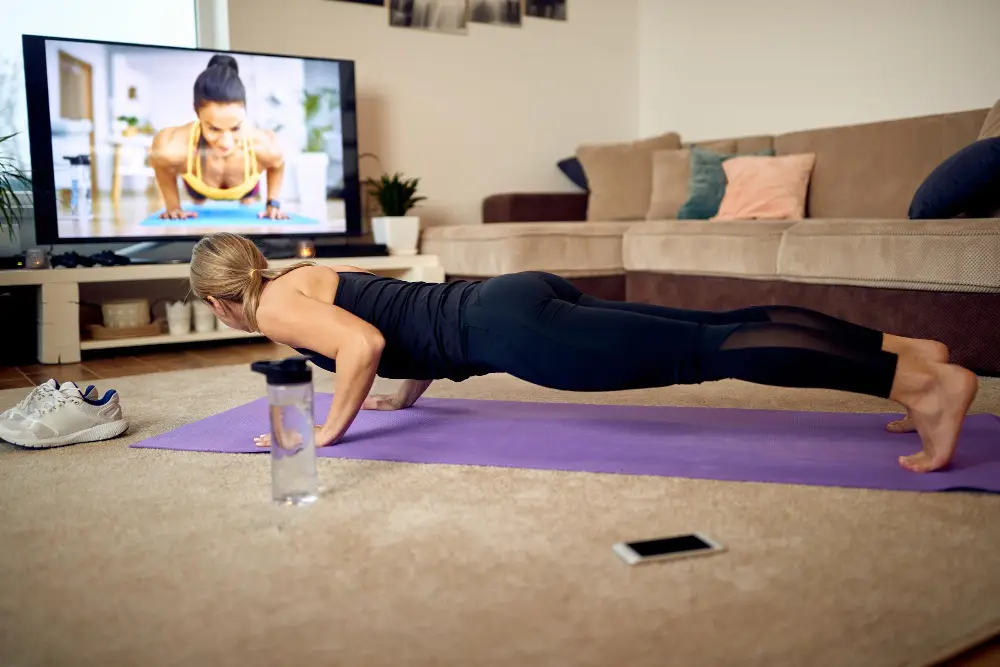
20-Minute Full Body Home Workout for BeginnersShort on time and new to exercise? This 20-minute full body workout is designed for beginners. It needs no equipment, fits in a small space, and works your legs, arms, back, and core in one session.
Do it 3 times a week on non-consecutive days, such as Monday, Wednesday, and Friday.
Before You Begin
- Wear supportive shoes or train barefoot on a mat.
- Keep a bottle of water nearby.
- If you have a health condition, joint pain, or haven’t exercised in a long time, check with your doctor first.
Warm-Up (4 Minutes)
Do each move for 40 seconds with 20 seconds of easy walking in between:
- March on the spot, swinging your arms
- Arm circles, forward and backward
- Hip circles
- Bodyweight good mornings (hinge at the hips with a flat back)
The Main Circuit (12 Minutes)
Do each exercise for 40 seconds, then rest for 20 seconds. Complete the 6 exercises, rest for 1 minute, and repeat the circuit once more.
1. Bodyweight squat
Stand with feet shoulder-width apart. Sit back as if into a chair, keeping your chest up. Easier: squat to a real chair and stand back up.
2. Incline push-up
Place your hands on a kitchen counter or sturdy table. Lower your chest and push back up. Harder: do push-ups on your knees or toes.
3. Glute bridge
Lie on your back with knees bent. Squeeze your glutes and lift your hips. Lower slowly.
4. Reverse lunge
Step one foot back and lower your back knee toward the floor. Return and switch legs. Easier: hold a wall for balance.
5. Bird dog
On hands and knees, reach one arm forward and the opposite leg back. Hold for 2 seconds and switch sides.
6. Modified plank
Hold a plank on your forearms and knees, keeping a straight line from head to knees. Harder: lift your knees off the floor.
Cool-Down (4 Minutes)
Hold each stretch for 30 to 40 seconds:
- Standing quad stretch (each side)
- Hamstring stretch, reaching toward your toes
- Child’s pose
- Chest stretch with hands clasped behind your back
How to Progress
As the workout gets easier, make it harder in small steps:
- Weeks 1 to 2: follow the plan as written.
- Weeks 3 to 4: add a third round of the circuit.
- Weeks 5 to 6: work for 45 seconds and rest for 15 seconds.
- After that: swap in harder moves, such as jump squats or full push-ups.
Want more variety? Try our list of 30 best exercises to do at home and best home workout ideas.
Beginner Mistakes to Avoid
- Rushing reps: slow, controlled movement builds more strength.
- Holding your breath: breathe out on the effort.
- Skipping the warm-up: cold muscles are more likely to strain.
- Doing too much too soon: soreness for days means you overdid it.
The Science Behind Short Workouts
You don’t need an hour in the gym to improve your fitness. Short, focused workouts can build strength and stamina when you do them consistently. Health guidelines recommend at least 150 minutes of moderate activity each week plus muscle-strengthening activities on two or more days. Three sessions of this 20-minute workout, combined with daily walking, puts you well on the way.
Full body sessions are especially efficient for beginners. Training all major muscles in one session means each muscle group gets worked several times a week, even if you only exercise three days.
Sample 4-Week Beginner Schedule
- Week 1: 3 sessions, 2 rounds of the circuit, 40 seconds work and 20 seconds rest.
- Week 2: 3 sessions, 2 rounds, focus on slower and more controlled reps.
- Week 3: 3 sessions, 3 rounds of the circuit.
- Week 4: 3 or 4 sessions, 3 rounds, try one harder variation per exercise.
On rest days, go for a 20 to 30 minute walk or do gentle stretching.
Perfecting Your Form
Good technique keeps you safe and makes every rep more effective.
Squat
Keep your feet flat, knees in line with your toes, and chest lifted. Push your hips back as if sitting into a chair. Stop at a depth that feels comfortable without pain.
Incline push-up
Keep your body in a straight line from head to heels. Lower your chest toward the surface with elbows at about a 45-degree angle, not flared straight out.
Glute bridge
Push through your heels, not your toes. Squeeze your glutes at the top without arching your lower back.
Reverse lunge
Step back far enough that both knees bend to about 90 degrees. Keep your front knee over your ankle and your torso upright.
Bird dog
Move slowly and keep your hips level, as if balancing a cup of water on your lower back.
Plank
Pull your belly button gently toward your spine and keep your hips in line with your shoulders, not sagging or lifted high.
What to Eat Before and After Your Workout
- Before: if you’re hungry, have a light snack 30 to 60 minutes beforehand, such as a banana, a handful of nuts, or yogurt.
- After: a balanced meal with protein and carbohydrates helps your muscles recover, for example eggs with toast, dal with rice, or a smoothie with milk and fruit.
- Throughout the day: drink water regularly, especially if you sweat a lot.
Staying Motivated
- Schedule your workouts like appointments.
- Lay out your workout clothes the night before.
- Track each session in a notebook or app.
- Celebrate small wins, like your first full push-up.
- Exercise with a family member or friend for accountability.
- Use a playlist that’s exactly 20 minutes long.
When to Check With a Doctor
Speak to a doctor before starting if you have heart disease, high blood pressure, diabetes, joint problems, or are pregnant. Stop exercising and seek advice if you feel chest pain, severe breathlessness, dizziness, or sharp joint pain.
For more variety, browse 30 best exercises to do at home.
Frequently Asked Questions
Should I feel sore after this workout?
Mild soreness for a day or two is normal when starting. Severe pain or soreness lasting more than a few days means you should ease off.
Can I do this workout in the morning?
Yes. Any time of day works. Choose the time you can stick with most consistently.
Is a 20-minute workout enough?
Yes, for beginners. Three 20-minute sessions a week plus daily walking is a strong start toward recommended activity levels.
Can I do this workout every day?
Rest days help muscles recover. Do the circuit 3 times a week and walk or stretch on other days.
Will this workout help me lose weight?
It helps by building muscle and burning calories. For weight loss, combine it with a balanced diet and more daily movement.
Disclaimer: This article is for general information only and is not a substitute for professional medical advice. Always consult a qualified doctor about your health.


